
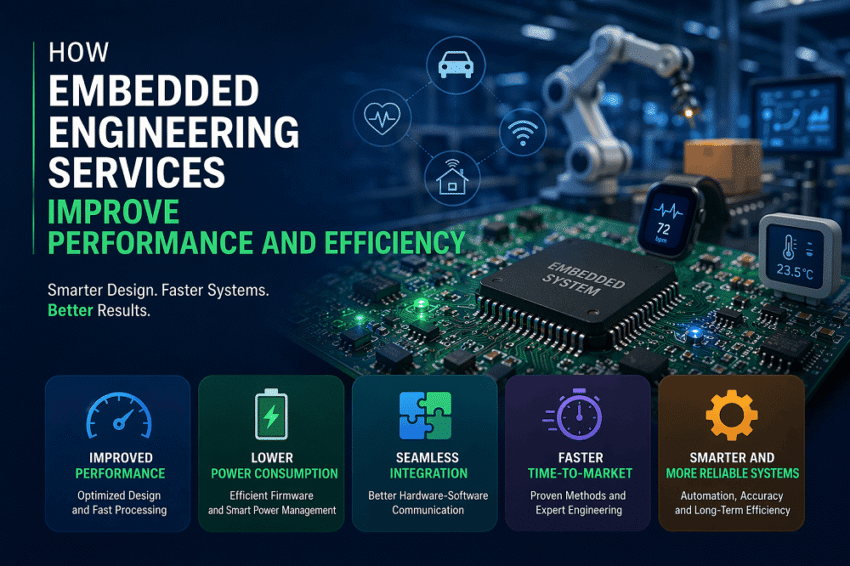
In today’s fast-moving digital world, businesses rely on smart devices and connected systems. From consumer electronics to industrial machines, embedded systems play a key role in making products work efficiently. This is where Embedded Engineering Services come into the picture.
These services focus on designing, developing, and maintaining embedded systems. They help businesses build reliable, high-performing, and cost-effective solutions. In this article, we will explore how Embedded Engineering Services improve performance and efficiency across different industries.
What Are Embedded Engineering Services?
Embedded Engineering Services involve the creation of systems that are built into hardware devices. These systems control functions and perform specific tasks. They are commonly found in products like smartphones, medical devices, automotive systems, and home appliances.
These services include:
- Hardware design
- Software development
- Firmware programming
- System integration
- Testing and maintenance
By combining hardware and software, embedded engineers create systems that are fast, reliable, and efficient.
The Importance of Performance and Efficiency
Performance and efficiency are critical for any product. A slow or unreliable system can lead to poor user experience and higher costs. On the other hand, a well-designed embedded system can:
- Improve speed and responsiveness
- Reduce power consumption
- Enhance reliability
- Lower operational costs
Embedded Engineering Services focus on optimizing every part of the system to achieve these goals.
How Embedded Engineering Services Improve Performance
1. Optimized System Design
Embedded engineers design systems with specific tasks in mind. This focused approach improves performance. Unlike general-purpose systems, embedded systems are built to handle defined functions. This reduces unnecessary processing and improves speed.
Engineers also choose the right hardware components. They select processors, memory, and sensors based on performance needs. This ensures smooth and fast operation.
2. Efficient Firmware Development
Firmware is the software that runs on embedded devices. It controls how the hardware works. Well-written firmware improves system performance.
Embedded Engineering Services ensure that firmware is:
- Lightweight
- Fast
- Stable
Engineers remove unnecessary code and optimize algorithms. This reduces processing time and improves response speed.
3. Real-Time Processing Capabilities
Many embedded systems need to respond quickly. For example, automotive safety systems or medical devices must react in real time.
Embedded Engineering Services use real-time operating systems (RTOS). These systems ensure that tasks are completed within strict time limits. This improves accuracy and reliability.
4. Better Hardware-Software Integration
Performance depends on how well hardware and software work together. Poor integration can slow down the system.
Embedded engineers ensure seamless integration. They test compatibility and fine-tune communication between components. This results in faster data processing and better overall performance.
How Embedded Engineering Services Improve Efficiency
1. Reduced Power Consumption
Power efficiency is very important, especially for battery-operated devices. Embedded Engineering Services help reduce energy usage.
Engineers use low-power components and optimize software. They also implement power-saving modes. This extends battery life and reduces energy costs.
2. Resource Optimization
Embedded systems often have limited resources. These include memory, processing power, and storage.
Embedded engineers make the best use of these resources. They write efficient code and use lightweight frameworks. This ensures that the system runs smoothly without wasting resources.
3. Automation and Smart Control
Embedded systems can automate many tasks. This improves efficiency in industries like manufacturing and healthcare.
For example:
- Machines can operate with minimal human input
- Sensors can monitor conditions and adjust operations
- Systems can detect errors and fix them automatically
Embedded Engineering Services make these smart features possible.
4. Faster Time-to-Market
Developing a product quickly is important for business. Embedded Engineering Services help speed up the development process.
Experienced engineers follow proven methods and use advanced tools. This reduces development time and avoids costly mistakes. As a result, businesses can launch products faster.
Industry Applications
Automotive Industry
Embedded systems control many functions in modern vehicles. These include engine control, safety systems, and infotainment. Embedded Engineering Services improve vehicle performance and fuel efficiency.
Healthcare Industry
Medical devices rely on embedded systems for accurate results. These include patient monitors, imaging devices, and wearable health trackers. Efficient systems ensure reliability and patient safety.
Consumer Electronics
Devices like smartphones, smart TVs, and home automation systems use embedded technology. Embedded Engineering Services enhance speed, battery life, and user experience.
Industrial Automation
Factories use embedded systems to automate processes. This improves productivity and reduces errors. Efficient systems also lower operational costs.
Key Benefits of Embedded Engineering Services
- Improved system performance
- Lower energy consumption
- Better reliability and stability
- Reduced development costs
- Enhanced user experience
- Faster product delivery
These benefits make Embedded Engineering Services essential for modern product development.
Choosing the Right Embedded Engineering Partner
Selecting the right service provider is important. Businesses should look for:
- Strong technical expertise
- Experience in relevant industries
- Proven track record
- Ability to deliver customized solutions
- Good support and maintenance services
A reliable partner can make a big difference in the success of a project.
Future Trends in Embedded Engineering Services
The future of Embedded Engineering Services looks promising. New technologies are shaping the industry.
Some key trends include:
- Internet of Things (IoT)
- Artificial Intelligence (AI) integration
- Edge computing
- 5G connectivity
These advancements will further improve performance and efficiency. They will also open new opportunities for innovation.
Conclusion
Embedded Engineering Services play a vital role in modern technology. They help create systems that are fast, efficient, and reliable. By optimizing both hardware and software, these services improve performance and reduce costs.
Businesses that invest in Embedded Engineering Services can gain a competitive edge. They can deliver better products and meet customer expectations. As technology continues to evolve, the importance of these services will only grow.