
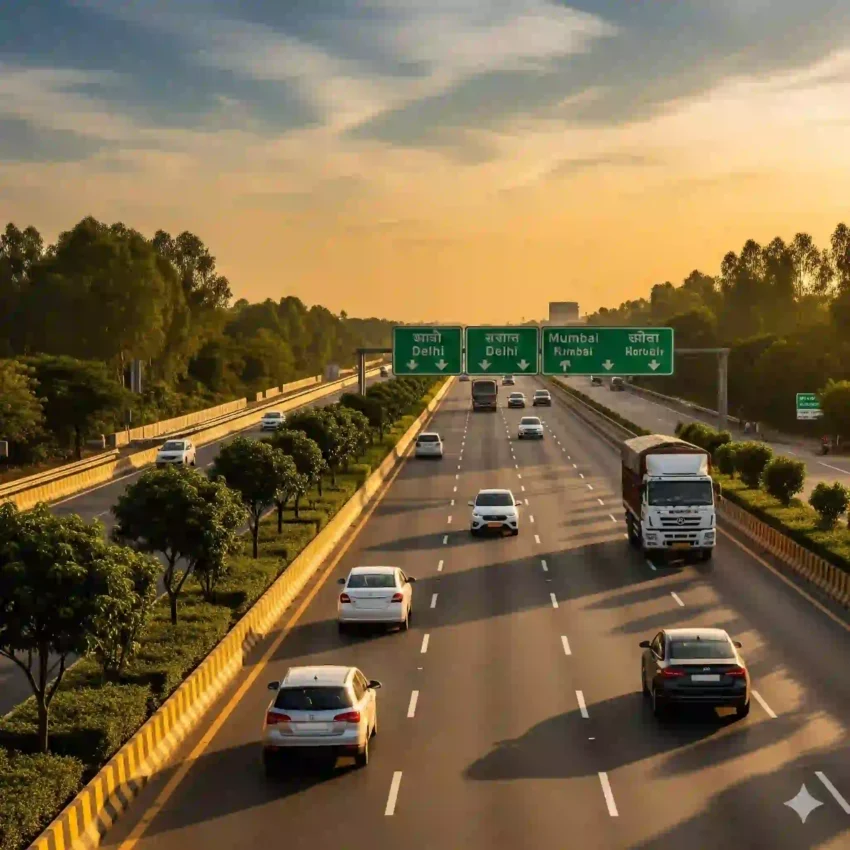
In the heart of a rapidly evolving India, the National Highways (NH) serve as the country’s circulatory system. From the snow-capped peaks of Kashmir to the tropical shores of Kanyakumari, these roads don’t just connect cities; they bridge dreams, commerce, and culture.
As of 2025, India has solidified its position as having the second-largest road network in the world, spanning over 66.71 lakh km, with the National Highways alone accounting for approximately 1,46,560 km.
In this blog, we dive deep into the current status, major projects, and the future of National Highways in India.
1. The Backbone of Indian Infrastructure: Recent Statistics
Under the visionary leadership of the Ministry of Road Transport and Highways (MoRTH), the pace of construction has reached record-breaking speeds.
-
Total Length: ~1,46,560 km (as of late 2024/early 2025).
-
Growth: A staggering 61% increase in network length since 2014.
-
Target 2025: The government aims to add another 13,000 km by the end of the 2024-25 fiscal year.
-
Freight Impact: While NHs constitute only about 2% of the total road length, they carry over 40% of India’s total road traffic.
2. Iconic Highways You Should Know
If you are traveling across India, these are the legendary routes that define the landscape:
-
NH 44 (The Longest Highway): Stretching 3,745 km, it connects Srinagar to Kanyakumari, passing through 11 states.
-
The Golden Quadrilateral: A 5,846 km network connecting the four major metros—Delhi, Mumbai, Chennai, and Kolkata.
-
NH 48: The vital link between Delhi and Chennai via Mumbai and Bengaluru.
3. Bharatmala Pariyojana: The Game Changer
The Bharatmala Pariyojana is India’s flagship infrastructure program aimed at optimizing efficiency.
-
Economic Corridors: Developing 26,000 km of Economic Corridors to ensure faster movement of goods.
-
Logistics Parks: Building 35 Multi-Modal Logistics Parks (MMLPs) to reduce logistics costs from 14% to 9% of GDP.
-
North-East Connectivity: Special focus on the SARDP-NE project to integrate the “Seven Sisters” with the rest of the country.
4. The Rise of Green Expressways
India is transitioning from traditional highways to Access-Controlled Green Expressways. These are designed for speeds up to 120 km/h and include:
-
Delhi-Mumbai Expressway: Reducing travel time between the two capitals to just 12 hours.
-
Dwarka Expressway: India’s first 8-lane elevated urban expressway.
-
Green Initiatives: Planting millions of trees along the corridors and using recycled plastic and fly ash in construction.
5. Digital Transformation: FASTag and GNSS
The era of long queues at toll plazas is over.
-
FASTag: Has achieved nearly 98% penetration, saving thousands of crores in fuel and time.
-
Satellite Tolling (GNSS): India is piloting Global Navigation Satellite System-based tolling, where money is deducted based on the exact distance traveled, eliminating the need for physical toll booths.
Conclusion: Driving Towards a $5 Trillion Economy
National Highways are the silent engines of India’s GDP. By reducing travel time, lowering fuel consumption, and connecting rural farmers to urban markets, these roads are paving the way for a “Viksit Bharat” (Developed India) by 2047.
Whether you are a logistics professional, a road-trip enthusiast, or a student of Indian economy, the transformation of Indian roads is a story of grit and engineering marvel.